Every year, the monsoon puts Indian homes to the test. Walls that looked perfect in March start showing damp patches, peeling paint, or a musty smell by August. If you have ever repainted a wall only to watch it bubble up again the following year, you already know that most conventional finishes were never really built for our weather.
Lime plaster is different, and the reason comes down to how the material actually behaves, not just how it looks.
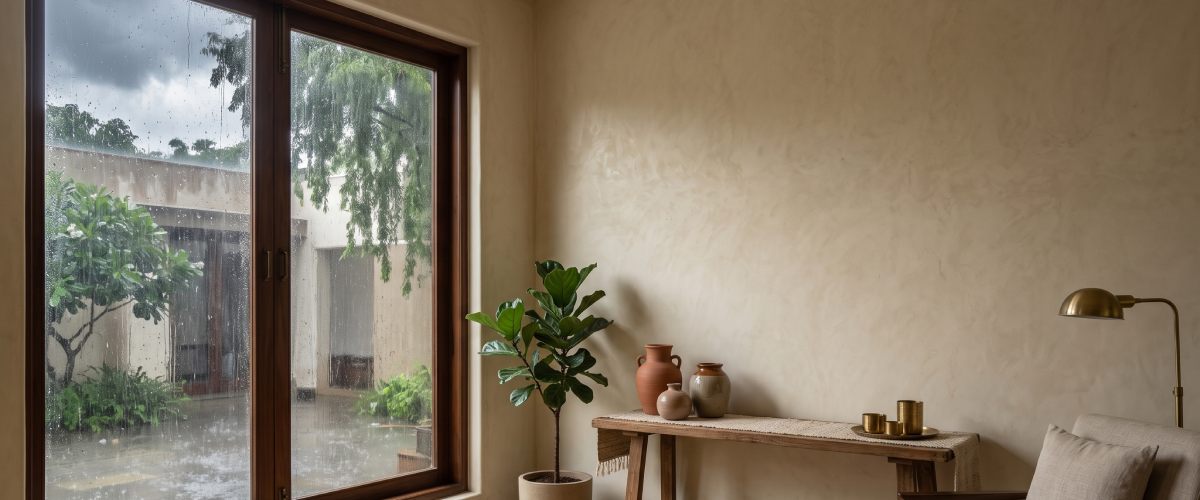
Why Most Wall Finishes Struggle in the Monsoon
Cement-based plasters and regular paints form a fairly sealed surface. That sounds like a good thing until humidity rises. Moisture that gets in through capillary action or condensation has nowhere to go. It sits trapped behind the paint film, and over a few monsoon cycles, this shows up as blistering, flaking, or dark patches of mold and mildew.
POP finishes have a similar problem. They are gypsum based, which means they absorb moisture readily and can soften, crack, or develop stains when humidity stays high for weeks at a time, which is exactly what happens across most of India between June and September.
Why Lime Plaster Handles Moisture Differently
Lime plaster is a breathable material. This is the single most important property when it comes to monsoon performance.
It lets moisture move through, not get trapped: Lime plaster has a naturally porous structure. Instead of sealing moisture behind an impermeable layer, it allows walls to absorb small amounts of humidity and release it again as conditions dry out. This back and forth movement is what prevents the trapped dampness that leads to peeling and staining in cement based systems.
It resists mold and mildew naturally: Lime is highly alkaline, with a pH that is inhospitable to mold spores and fungal growth. In a season when bathroom corners, basements, and north-facing walls are prone to black spotting, this is a meaningful advantage over finishes that offer no biological resistance at all.
It regulates surface humidity: Because lime plaster absorbs and releases moisture rather than blocking it, interior surfaces tend to feel less clammy during humid months. This is part of why older lime plastered structures in coastal and high rainfall regions have historically held up well over decades.
It expands and contracts without cracking: Temperature and humidity swings between the dry pre-monsoon heat and the wet months that follow cause materials to expand and contract. Lime plaster has a flexibility that rigid cement-based finishes lack, which reduces the hairline cracking that often becomes an entry point for water.
A Longer-Term Case for Humid Climates
For homeowners and architects working across India's coastal cities and high-rainfall regions, this breathability is not a seasonal nicety; it is a structural advantage. Walls that manage moisture well need less frequent repainting, show fewer recurring damp patches, and generally age with more character rather than visible wear.
If you are planning a renovation or new build in a monsoon-heavy region, it is worth having a conversation about finish selection before the rains, not after the damage shows up.
Why Choose Limocoat
Limocoat is a lime based wall finish designed specifically for the demands of Indian climates, including the extended humidity and rainfall that define the monsoon months. It is applied through network of trained applicators, so the breathability and durability the material offers on paper are backed by consistent, professional application on site.
Beyond monsoon resilience, Limocoat finishes offer a natural, artisanal texture that ages gracefully rather than showing wear the way conventional paints and cement based plasters do. Homeowners, architects, and designers choose Limocoat when they want a wall finish that performs through India's toughest weather while still giving a space a distinctive, premium look.